
Why should I get treated for sleep apnea?
Untreated sleep apnea can negatively impact your health and quality of life. Fortunately, with the right support your sleep apnea can be managed.
The first step to finding the most appropriate sleep apnea treatment is to have an overnight sleep study to diagnose your sleep apnea. You can start the process by downloading our referral form below and speaking to your GP.
Depending on the sleep study results there are several sleep apnea treatments options available.
If you are diagnosed with sleep apnea, your sleep physician may recommend a combination of the below depending on your circumstances and sleep apnea severity.
What PAP therapy is made of
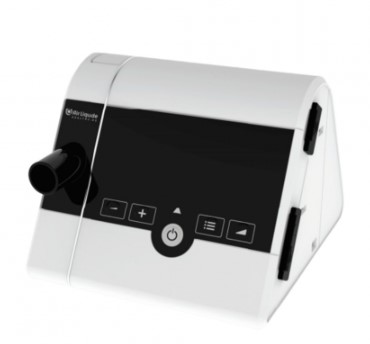
PAP unit
This unit generates the air flow used to stop your airway collapsing along with housing the computer that controls your PAP.
Your sleep physician will either prescribe you a CPAP, APAP or VPAP sleep apnea machine based on your home-based sleep assessment results.
Read more on Positive Airway Pressure (PAP)
Humidifier
Adds moisture to the air so that treatment is more comfortable.
Therapy importance:
A humidifier may stop the dry mouth feeling associated with PAP use.
Overly dry mouth may indicate a poorly fitted mask. Selecting the right mask is essential for effective treatment.
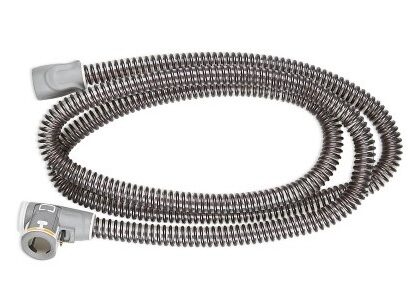
Tubing
Carries the air between the PAP unit and the mask. Some tubing is heated for patient comfort.
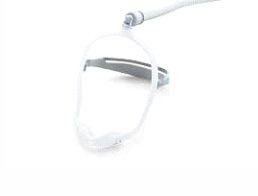
Mask
Used to deliver the air from the PAP unit. Masks are the most important part of treatment. They come in many different sizes and styles.
Therapy importance:
Mask discomfort is a major cause of people stopping treatment. Patients should try multiple masks to make sure their treatment is comfortable and effective. We will work with you to find the best mask for you.
Alternatives to PAP therapy
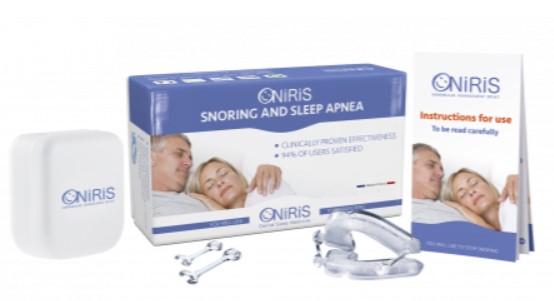
Mandibular advancement splint
Mandibular advancement splint (MAS) therapy is a recognised sleep apnea treatment alternative for those that may not tolerate CPAP.
Positional therapy
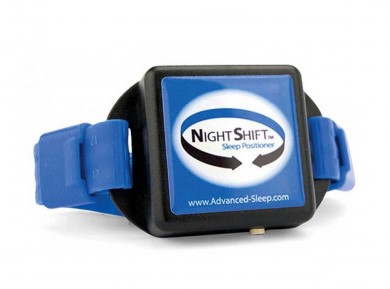
The Night Shift is a patented, clinically-proven therapy for patients with positional obstructive sleep apnea (POSA) that can be worn around the neck. After allowing the user time to fall asleep in any position, it begins to gently vibrate when the user attempts to back-sleep.
Features & benefits
- Monitor how efficiently the user slept and the degree of sleep fragmentation
- Assess the association between loud snoring and sleep quality
- Determine if snoring and poor sleep quality is limited to back-sleeping
- Compare the effectiveness of other OSA or snoring therapies with and without position therapy
- Single charge can last for up to 3 nights
- Lightweight
Buy Nightshift positional device
Lifestyle modifications
There are lifestyle changes you can make that may reduce the severity of your sleep apnea and improve the effectiveness of other sleep apnea treatments.
Weight loss
Excess weight is the most common contributing factor to obstructive sleep apnea (OSA). The excess weight around your neck and the effects of gravity exacerbate your sleep apnea by applying downward pressure on your airway.
Losing weight may help to reduce the severity of your OSA along with other health benefits. It is a vicious cycle as some people with untreated sleep apnea may find it harder to lose weight; a poor night’s sleep will induce cravings for high calorie food and a lack of energy makes it difficult to exercise. In some people, treating their sleep apnea first has aided weight loss.1
Reduce alcohol, sleeping pills and other sedatives
Avoid alcohol, medicines (such as sleeping pills) or other sedatives (natural or manufactured) before bed. Alcohol acts as a sedative; it may cause your throat muscles to relax, exacerbating your sleep apnea. Always speak to your doctor before stopping or changing any medication.
Quit smoking
Quitting smoking may reduce the severity of your snoring and sleep apnea and improve other health conditions. Smoking may increase the severity of your snoring and sleep apnea. The poison in cigarettes can cause your airway to swell. Smoking also acts as a sedative.
All treatment options should be considered under the guidance of your sleep physician and doctor.
- Romero-Corral, A., et al. (2010). Interactions between obesity and obstructive sleep apnea: implications for treatment. Chest, 137(3), 711–719.