General CPAP Mask Questions
Make sure your mask is fitted correctly. Use a mirror to make sure the mask is symmetrically secured on your face. You can run a Mask Fit Test for confirmation by selecting this menu option on your CPAP device. Be aware, the pressure used during the test is often higher than what you will experience during your therapy. Refer to each device’s troubleshooting section for how to run the Mask Fit Test or ask your Sleep Therapy Consultant for more information.
If irritation or sores are developing, chances are you are over tightening your mask or your mask cushion and/ or headgear are due to be replaced. If this is not the cause then the shape of the mask may not suit you and a different mask choice may provide a more comfortable fit. Please contact your Sleep Therapy Consultant to help you refit your mask or provide an alternate solution.
All masks have exhalation ports to allow the escape of exhaled air which contains carbon dioxide. The higher the device pressure setting, the stronger this escape flow will be. Do not cover these exhalation ports as they are vital to the expulsion of carbon dioxide. Masks vary in their air diffusion features, if the escape flow is too much for you or your bed partner please contact your Sleep Therapy Consultant to try another mask.
Your mask size, style or fit may not be appropriate. Call your Sleep Therapy Consultant to discuss fit tips.
Wearing a CPAP mask can seem intimidating at first, however the key to adjusting to CPAP therapy is consistency. By wearing your mask and using the CPAP device every night, you are more likely to adjust quickly. Wearing your mask while reading or watching TV during the day or before bed may assist in acclimatising to CPAP therapy.
Source: ResMedThird-party website. The information on it is not controlled by Air Liquide Healthcare.
Excess condensation can form in the CPAP tubing when the temperature of your bedroom is cooler than the air coming from your device. This is what is referred to as ‘rainout’ and does not usually occur when the humidity is set to automatic. This setting can be checked and changed if necessary in your device’s patient menu. If the problem persists the humidifier temperature may need to be adjusted. Please contact your Sleep Therapy Consultant for assistance. The problem can also be rectified by slightly incresing the room temperature until the ‘rainout’ no longer occurs.
Some masks are more suitable for certain sleeping positions, but in gerenal, all masks are designed to accomodate any sleeping position. The exhalation ports on the mask allow exhaled breath to escape the mask no mater what position you are laying in.
The exhalation ports on your CPAP mask allow for exhaled breath to be vented out of the mask.
Yes, all of the mask parts can be purchased separately.
If your mouth is open while using a nasal pillow or nasal mask, air may leak out of your mouth instead of travelling into your upper airway. Most CPAP devices can accomodate for a small leakage but if the leak is too high, your CPAP device may provide more pressure than what is actually required to maintain an open airway. Chin straps are useful in maintaining a closed mouth.
Source: Sleep Health FoundationThird-party website. The information on it is not controlled by Air Liquide Healthcare.
The variation in mask size is one difference, but the main difference is the area of your face that the mask covers. A nasal pillow mask rests at the entrance of your nostrils, a nasal mask covers the nose and a full face mask covers the nose and mouth. The mask type that best suits you depends greatly on personal needs and preferences. Some things that you may want to take into consideration are your facial anatomy, facial hair, whether or not you’re claustrophobic, and if you have any underlying sinus or nasal conditions. Each mask has its own benefits and it’s recommend you see your Sleep Therapy Consultant or Sleep Physician if you are unsure on what will be best suited to your situation.
Source: ResMedThird-party website. The information on it is not controlled by Air Liquide Healthcare.
If the mask is not fitted to the face properly, it will not provide a effective seal and the air will leak out. If this is experienced, try readjusting the mask straps to ensure you have a tight seal to your face.
Source: Sleep Health FoundationThird-party website. The information on it is not controlled by Air Liquide Healthcare.
Your mask is arguably the most important piece of equipment in your CPAP setup. Like other regularly used personal health products, such as a toothbrush or razor/shaver, your mask becomes less effective and more unhygienic over time. The best way to know when it’s time for your mask (or any of its parts) to be replaced is to make it a habit of regularly inspecting it for wear and tear. Some mask parts will wear out sooner than you think! Mask cushions, for instance, rest against your face every night and can build up quickly with dirt, oil and bacteria. Without proper care, they can deteriorate leading to leaks and discomfort – even skin irritation. How often you replace your mask cushion depends on the kind you have. Silicone cushions are designed to be replaced every 6 months, whereas memory foam cushions are designed to be replaced monthly. Mask frames are more durable than mask cushions and their lifespan will depend on well you look after them. If they ever get damaged, cracked or discoloured, you should look to replace them. Mask headgear will lose elasticity and stretch out over time, leading to a bad mask fit. A common sign that your headgear needs to be replaced is when you’re starting to overtighten your headgear to achieve a secure seal. We suggest you replace headgear every 8 months or so to ensure your mask is always sealing as secure as it can without the need to overtighten it. Refer to your mask user instructions for further information.
Source: ResMedThird-party website. The information on it is not controlled by Air Liquide Healthcare.
No. A nasal cannula is too small and will not create a seal against your nostrils. The leak around the nasal cannula would be too high and the CPAP device would not be able to deliver the desired air pressure required to keep your airway open.
Click here to see our recommended cleaning schedule.
The cost of the mask varies depending on what brand and model you are looking at. It’s best to speak with your Sleep Therapy Consultant to find out more information about our range of masks.
To date, micro-CPAP devices are not registered for use in Australia. We only offer CPAP equipment that is registered for use in Australia as part of our therapy service.
Source: HealthlineThird-party website. The information on it is not controlled by Air Liquide Healthcare.
You can consider a Mandibular Advancement Splint (MAS) if you have been diagnosed with mild to moderate OSA, or moderate to severe OSA and intolerance to CPAP.MASs are specially made dental plates that are worn during sleep. They push your lower jaw forwards so that your throat opens up, reducing the risk that it will vibrate (snore) or obstruct. MASs are not suitable for patients with central sleep apnoea or with no teeth or very poor dental structure.
Sources: RACGP, Sleep Health FoundationThird-party websites. The information on them is not controlled by Air Liquide Healthcare.
A chinstrap may be helpful to keep your mouth closed and thus reduce mouth leakage. It is usually a piece of fabric, often fitted with velcro, that can be secured around your lower jaw and the top of your head. Speak to one of our Sleep Therapy Consultants about which size is best suited for you.
Source: Very Well HealthThird-party website. The information on it is not controlled by Air Liquide Healthcare.
It is important to clean your mask on a weekly basis. Dirt and oil from your skin can stick to the cushion and weaken the silicon (see “What part of the mask needs to cleaned more frequently?”) . Also, be sure to handle the silicone parts with care.
There are variations in each size and style of mask, but the main differences are concerned with the areas of the face are they cover. A nasal pillows mask rests at the entrance of the nostrils, a nasal mask covers the nose and a full face mask covers the nose and mouth. The mask type that best suits you depends greatly on personal needs and preferences. Some things that you may want to take into consideration when deciding what mask type is right for you is your facial anatomy, degree of facial hair, whether or not you’re claustrophobic, and if you have any sinus or nasal issues. Each mask has its own benefits and we recommend you see your Sleep Therapy Consultant or Sleep Physician if you are unsure.
Source: ResMedThird-party website. The information on it is not controlled by Air Liquide Healthcare.
If you comfortably breathe through your nose at night, a nasal pillow mask is a good option if you have a beard, as it sits underneath the nose and forms a seal inside the nostrils. Facial hair is unlikely to interfere with the use of this type of mask.
Pap Devices
Find the latest updates about the mask devices
Fisher & Paykel
Fisher & Paykel SleepStyle Auto
Fisher & Paykel SleepStyle
Philips
Philips DreamStation Go
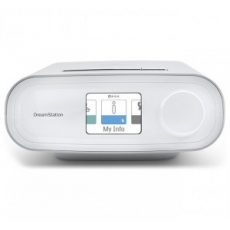
Philips DreamStation PAP/APAP
Shop this deviceResMed
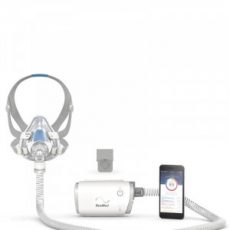
ResMed AirMini Bedside Starter Kit
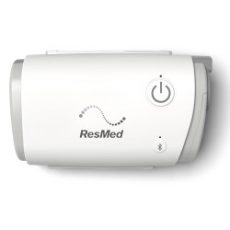
ResMed AirMini
Shop this device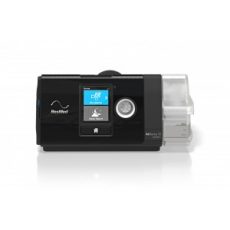
ResMed AirSense 10 AutoSet 4G
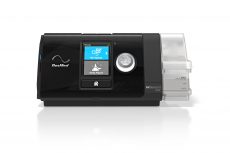
AirSense 10 Elite
BMC
Coming soon.